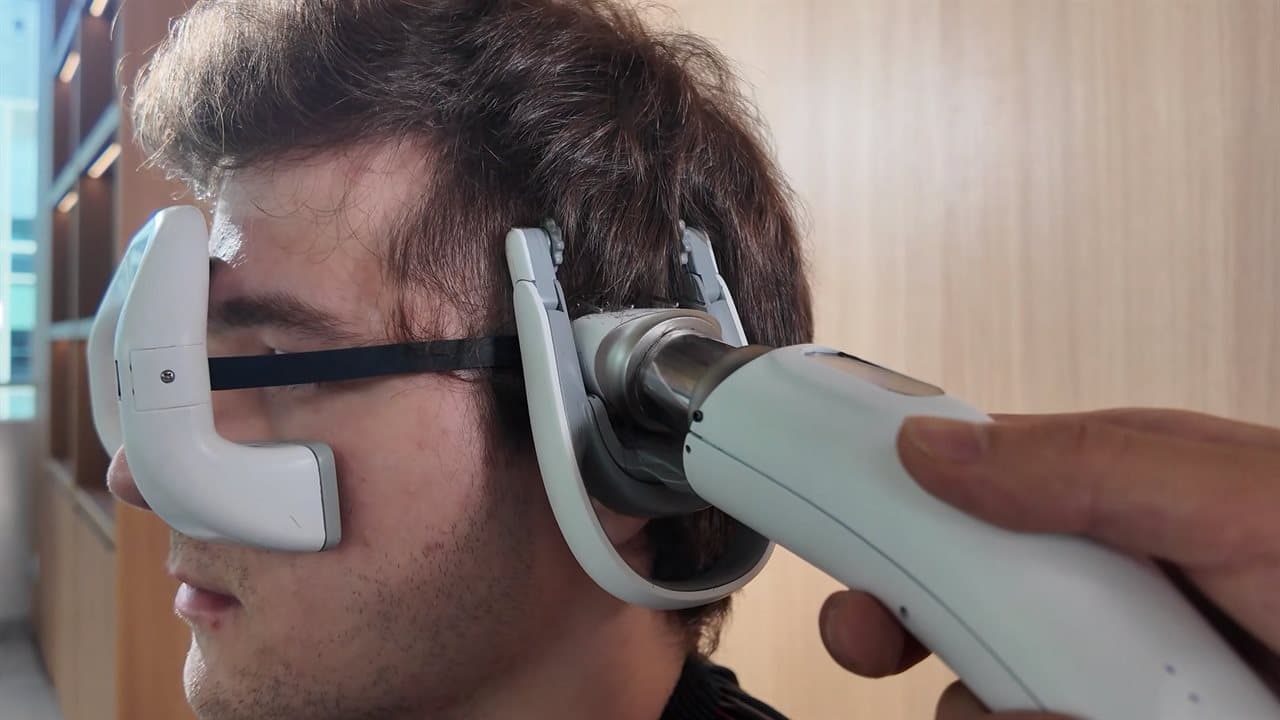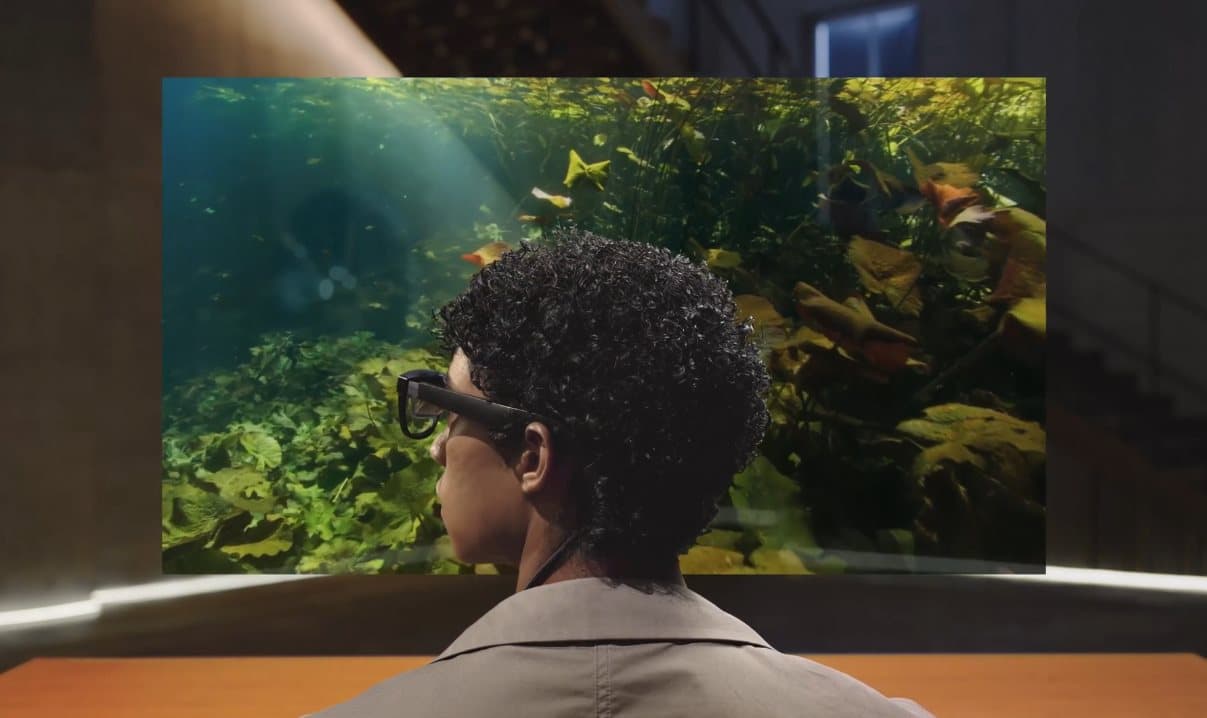
The pitch for XREAL Air 2 is simple: plug them into a device you already own and a massive virtual screen appears floating in front of your face. The glasses weigh about as much as a regular pair of sunglasses. You can wear them on a plane and watch a film on a screen that appears the size of a cinema wall, and the person in the middle seat has no idea.
What the XREAL Air 2 actually does
The Air 2 connects via USB-C to a Mac, PC, Android phone, iPad, or Steam Deck and projects two Sony micro-OLED displays directly in front of your eyes. The result reads to your brain as one large screen floating in space, running at up to 120Hz. There is no onboard processing: the glasses are a display, nothing more. Everything you see is coming from the device in your pocket or bag. The included magnetic privacy visor clips to the front and blocks the light around you, which helps with immersion and stops your seatmate from watching your screen.
Who actually buys these
Mostly two groups. The first is the frequent traveler who has watched one too many films on a 6-inch seatback screen and decided the alternative was worth carrying. The second is the remote worker who wants a large screen in a coffee shop without broadcasting their work to the room. The AR part is, in most real-world use, incidental: these are not glasses you walk around in looking at overlaid information. They are glasses you sit down in and look at a very large version of your laptop screen.
The honest question: why not just use your laptop?
At a desk, a monitor wins every time. No contest. The XREAL case collapses entirely the moment you are in a fixed location with a surface to put a screen on. The specific gap these fill is the situation where you have a device but no usable screen: a long flight, a waiting room, a hotel room with a bad TV you cannot connect to, a commute where you want to work. In those situations they are not a gimmick. In every other situation, they probably are.
The spatial computing future Apple Vision Pro is selling for several thousand dollars, compressed into glasses that weigh almost nothing and fit in your jacket pocket. The tradeoff is that they cannot do any of the spatial computing part. But they will absolutely let you watch a film on a train without anyone next to you knowing what you are watching.